Dentistry has AI. It doesn't yet have an AI-native practice.
Artificial intelligence is already moving through almost every part of the dental practice. Imaging was an early and obvious application. Today AI also touches documentation, scheduling, reception, insurance, revenue-cycle management, analytics, patient communication and digital workflow.
In our 2026 market scan, we identified 135 dental AI companies and platforms across 14 categories. The individual capabilities are becoming remarkably sophisticated.
But adding more AI products does not necessarily create an AI-native practice. A practice can have excellent imaging AI, excellent documentation AI, excellent scheduling automation and excellent analytics — and still be fragmented.
AI is moving unusually fast.
We have seen transformative technologies before. The personal computer changed how businesses operated. The internet changed how information moved. Smartphones changed how people interacted with both.
Generative AI is different in one important respect: the rate of adoption. Stanford's 2026 AI Index reports that generative AI reached roughly 53% population-level adoption within three years of its mass-market introduction, faster than the personal computer or the internet. The same report says 88% of surveyed organizations used AI in at least one business function in 2025.
The point is not the exact percentage. It is the speed at which assumptions expire. A dental practice that formed its view of AI a year ago may already be working from an outdated picture.
Almost everything about how dentistry is delivered has changed.
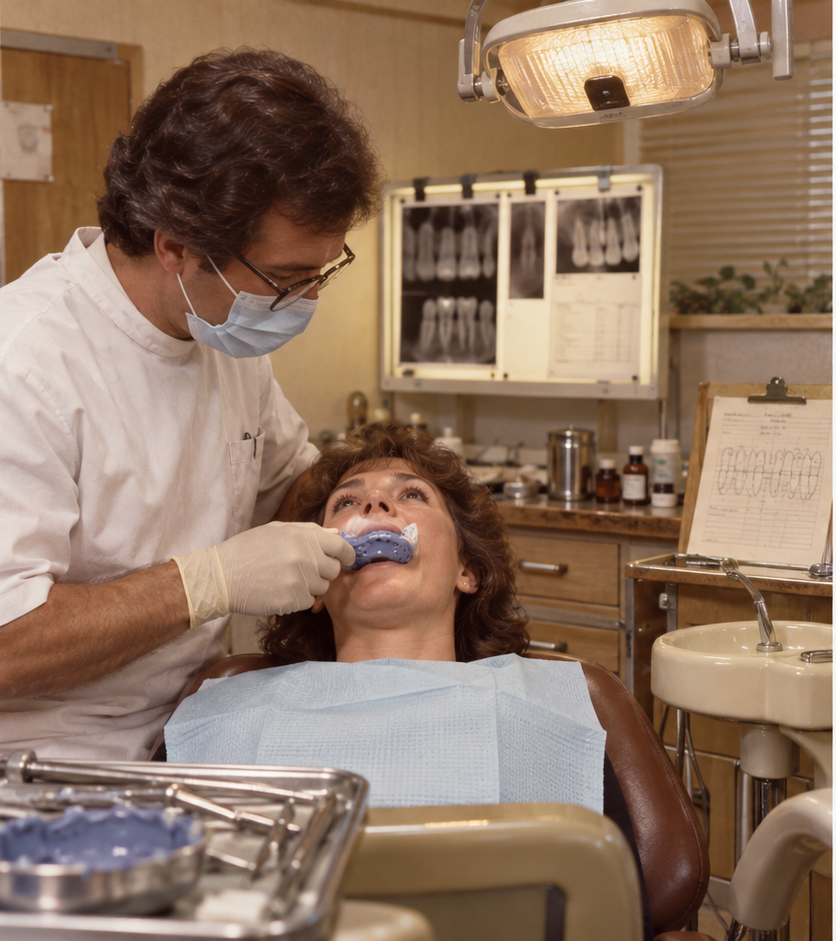
Then
Traditional workflows, more manual tools and more handoffs.
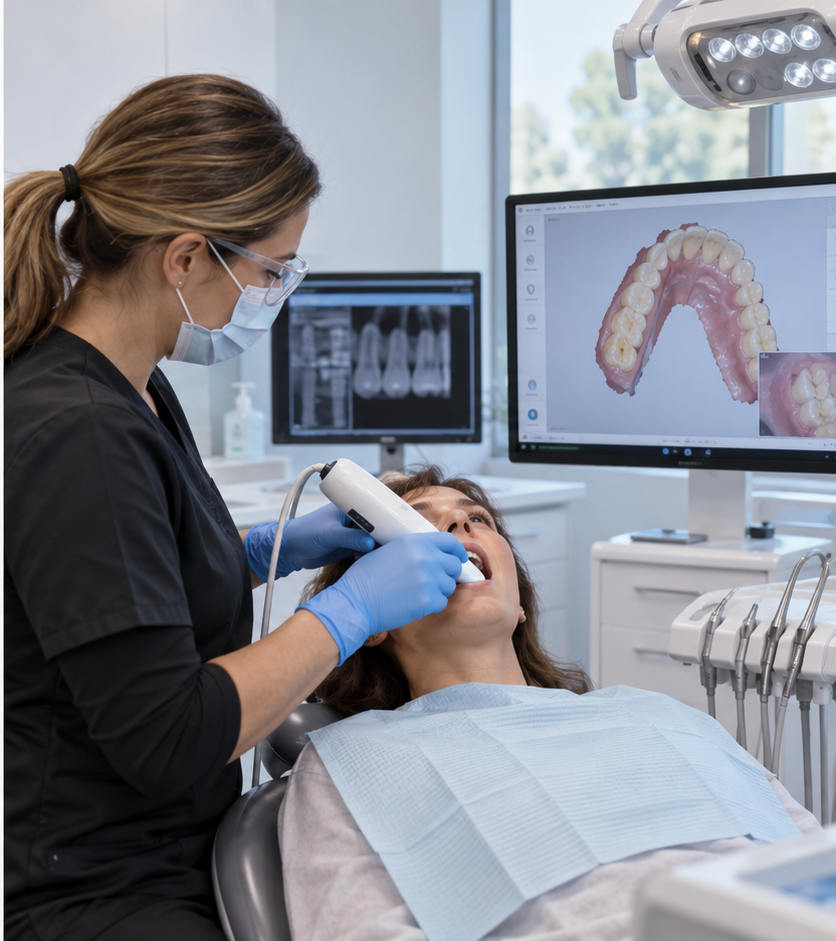
Now
Far better technology in the operatory — but many practice workflows still remain fragmented.
Clinical technology evolved dramatically. Yet many administrative workflows still depend on people moving information from one system to another, remembering the next step, reconciling incomplete data and operating software manually.
The pieces exist. The convergence doesn't.
Some systems are connected. They exchange data with a practice-management system and write information back. Some are contextual. They understand an appointment, conversation or scheduling interaction well enough to know what is happening within that workflow. Some are increasingly agentic. They can complete bounded tasks end to end.
The limitation is that these capabilities usually live in separate lanes.
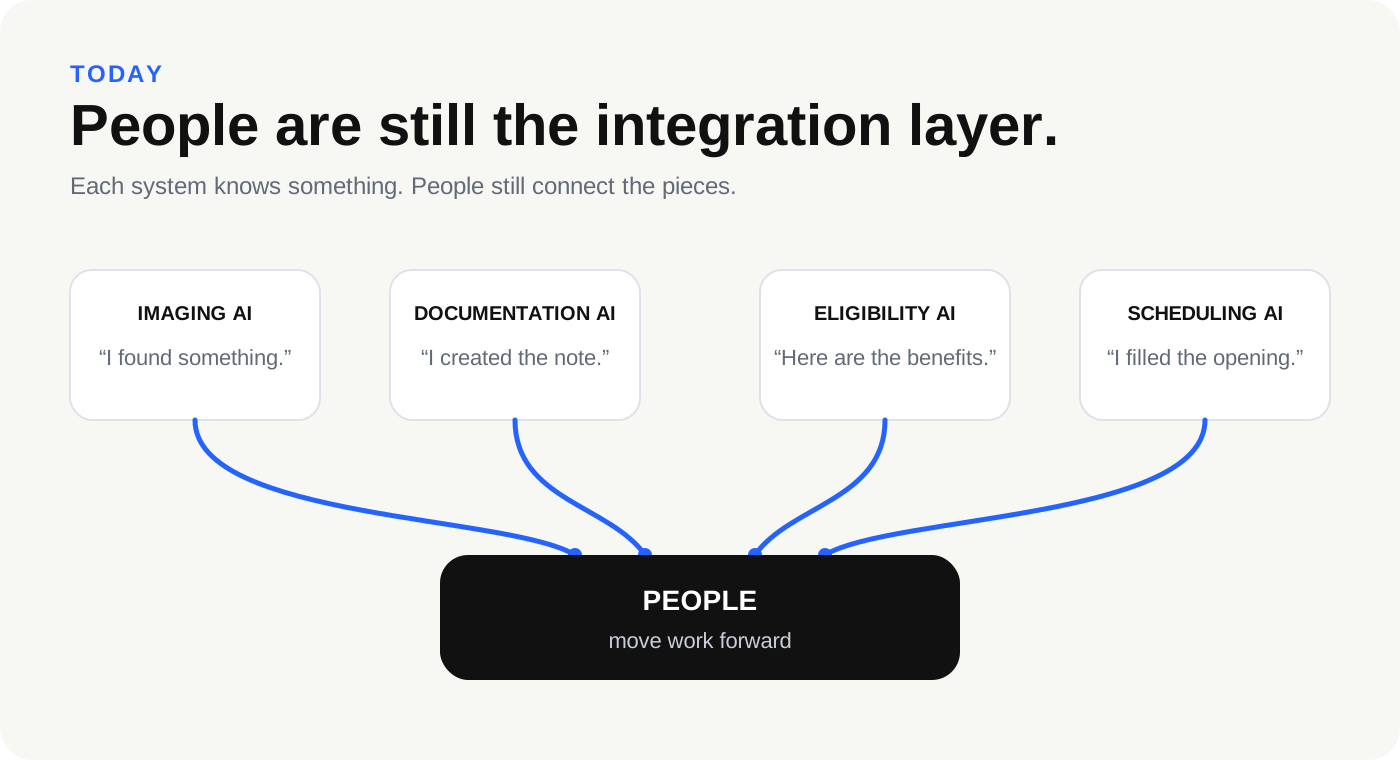
"I found something."
"I created the note."
"Here are the benefits."
"I filled the opening."
The plumbing may matter more than the model.
We spend a great deal of time asking which AI model is smartest. In dentistry, that may not be the biggest bottleneck.
AI depends on context. Context depends on information being available. And dental information remains fragmented across practice-management systems, imaging, communications, payment platforms, specialists, insurance and patient records.
The business also has to be described clearly enough for software to reason about it: what the objects are, how they relate to one another, what rules apply, who has authority, what can happen automatically and when a person must be asked.
“The next breakthrough may depend less on another leap in raw intelligence than on giving intelligence the context it needs to act safely.”
This is less a model problem than an operating-architecture problem.
The unglamorous work is describing the business clearly enough that software can participate in it safely, predictably and usefully.
Not one system to replace everything. One layer to coordinate it.
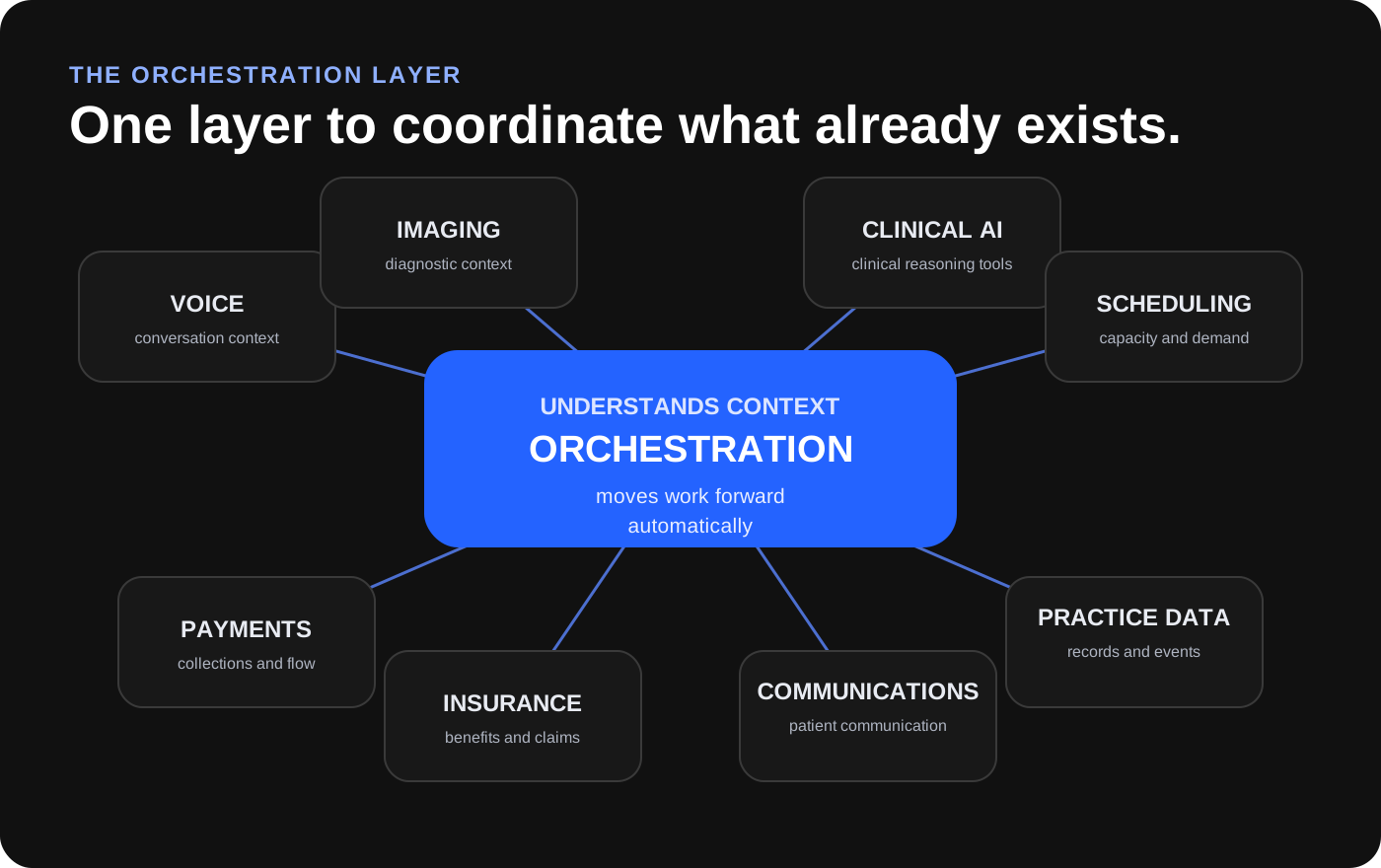
It does not need to own every piece of data. It does not need to replace every specialist system. It needs appropriate access to the right information at the right time, a model of identity and permissions, and a clear understanding of where its authority ends.
What happens when the workflow itself becomes the input?
Today, software usually needs us to tell it what we are doing. Open the patient. Select the appointment. Choose the procedure. Enter the finding.
But dentistry already produces a huge amount of natural input through the work itself. People speak. The schedule tells us what should be happening. The room tells us where it is happening. Patient identity tells us who is involved.
The important distinction is between hearing words and understanding the event. A microphone may know somebody said “number thirty.” A contextual system knows who said it, which patient they are with, where they are, which appointment is underway and how that statement relates to the encounter.
The market is already solving pieces of this problem.
Dental AI is developing in specialized lanes. Imaging platforms such as Overjet and Pearl apply AI to radiographic analysis, while products such as ChartAI apply AI to the clinical conversation and documentation workflow.
These examples are illustrative, not a ranking or endorsement. The larger question is how increasingly capable specialist systems begin sharing context across the practice.
Saving time is only the first-order effect.
Saving ten minutes is useful. The larger question is what happens to those ten minutes. Can another patient be seen? Does overtime fall? Can an assistant support another operatory? Can the practice grow without administrative headcount rising at the same rate?
Labour leverage
AI replaces pieces of jobs before whole jobs. Remove repetitive work across several roles and workforce design begins to change.
Revenue leakage
Missed calls, unfilled slots, forgotten plans and avoidable denials are small individually and material across a year.
Working capital
Fewer avoidable denials, faster eligibility and earlier documentation can compress the time between doing dentistry and getting paid.
Practice value
Predictable systems, cleaner data and lower key-person dependency can make an operating model easier to scale and transfer.
There is always a catch.
The deeper AI participates in the practice, the more explicit its authority must become. Observing something, recommending something, preparing work and executing an action are different levels of autonomy.
A reminder email is not a diagnosis. Drafting a referral is not approving it. Preparing a prescription is not deciding that it should be issued. Autonomy becomes manageable when authority is defined action by action.
If you were starting your practice again tomorrow, would you design it the same way?
Would you build the same administrative structure? The same handoffs? The same roles? The same software architecture? The same amount of manual work?
Would audio capture simply be assumed? Would the physical layout change if fewer people needed to sit in front of terminals? Would the economics of operating multiple locations change?
People still make the consequential decisions. They still own the relationships. They still provide the judgment. But more of the machinery underneath the practice begins working for them instead of waiting for them.